 Back to sepiabio.com
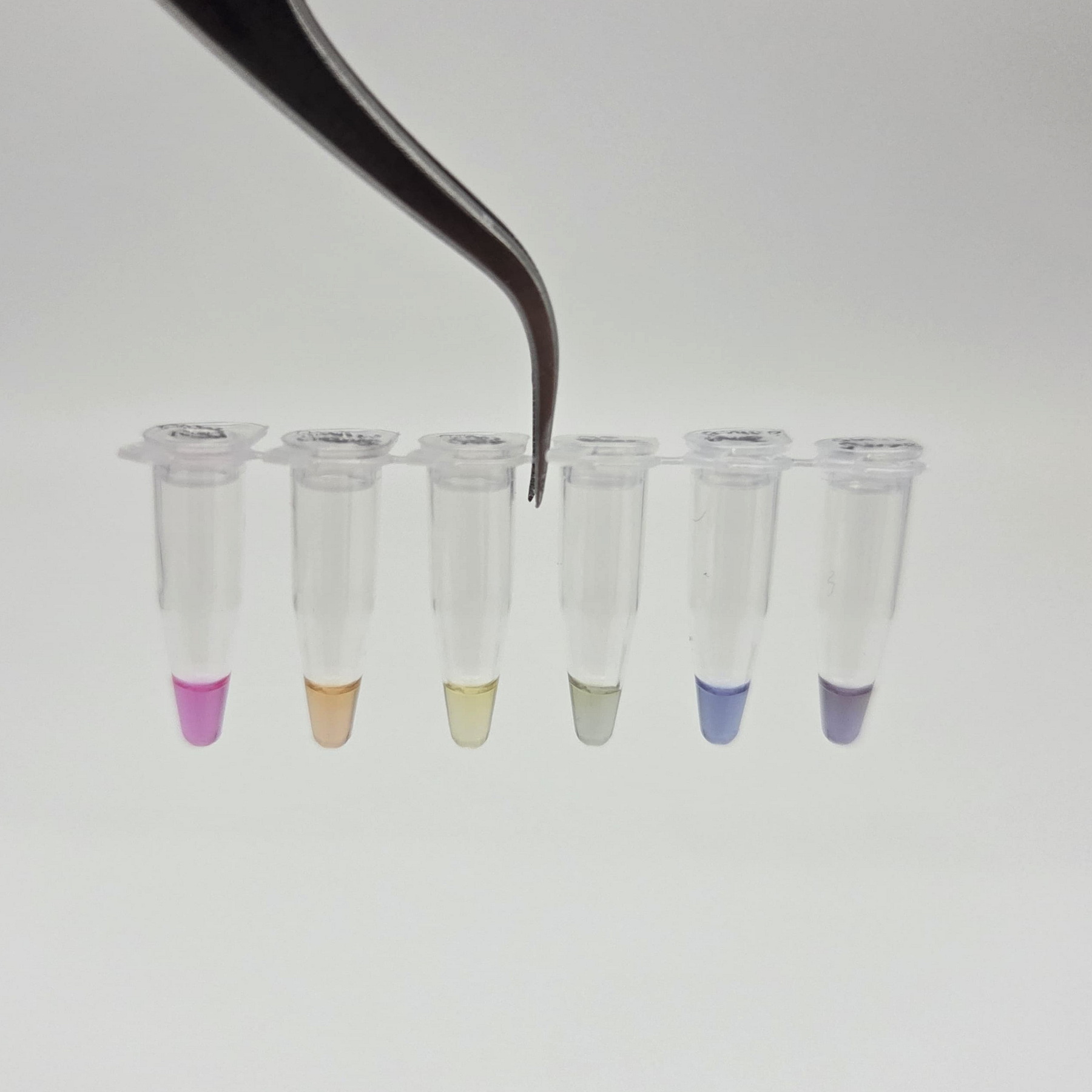
Figure 4. The OpenCFPS™ E. coli Core Kit produces a variety of proteins. Multiple fluorescent and chromogenic proteins are expressed and visualized in daylight. Courtesy of Gabrielle Ho.
From left to right, the samples shown are: 1) eforRed, 2) amilCP C61V/Q62G (orange variant), 3) amilGFP, 4) aeBlue, 5) amilCP C61V/Q62N (blue variant), and 6) amilCP C61F/Q62M (purple variant). eforRed, amilGFP, and aeBlue plasmids were provided courtesy of the Adamala Lab. The amilCP variants were generated by site-directed mutagenesis and cloned via Gibson assembly into the same T7Max promoter and plasmid backbone used for the other constructs.
Sources: eforRed (FPbase); amilGFP (FPbase); aeBlue (FPbase); amilCP mutants (Liljeruhm et al., 2018).
Immediately prior to cell-free expression, plasmid DNA was purified using QIAGEN's cleanup protocol, "Purification of plasmid DNA prepared by other methods," as described in the QIAGEN handbook (Hilden, Germany). Briefly, 5 volumes of Buffer PB were added to 1 volume of plasmid and applied to a QIAprep 2.0 Spin Column. The column was washed with Buffer PE, centrifuged again to remove residual wash buffer, and the DNA was eluted with water.
DNA was added to the cell-free expression reaction (Extract E000225121803 at 30%, Buffer B000126022403 at 40%) at a final concentration of 2 nM in a 50 µL reaction volume in a 1.5 mL tube. The tube cap was removed and replaced with a Breathe-Easy membrane (Diversified Biotech, Massachusetts, USA) and plastic cover. Reactions were incubated on a Thermomixer C (Eppendorf, Hamburg, Germany) at 29°C and 1,600 rpm for 20 hours, protected from light with foil.
Following expression, reactions were incubated at 4°C for 48 hours to allow chromophore maturation. Samples were then centrifuged at 10,000 × g for 10 minutes, and the supernatant was transferred to clean PCR tubes for photos.
Protein structures were predicted locally using ColabFold/AlphaFold2 on a Mac mini with Apple M4 and 16 GB memory (Apple, California, USA); secondary structures were determined using DSSP.